



About
About Us

SCTC is an LTA registered club, a registered Community Amateur Sports Club and a Change4Life partner.

We are a small and friendly tennis club situated in pleasant grounds in Sutton, Surrey, UK (on the Surrey-London borders). We play all year round on our 7 tennis courts, with various weekly club sessions, regular internal tournaments and leagues, and several teams in the LTA Surrey leagues.
We always welcome enquiries from anyone interested in joining - be they experienced club players, social players, adult beginners, rusties (i.e. people who haven't played in years), juniors or veterans. We exist purely for the fun of playing tennis and are not for profit making organisation. All subscriptions are used for the running and maintenance of the club and for providing free coaching opportunities to new members.
Sutton Churches Tennis Club is associated with Sutton Trinity and Sutton Baptist churches. Membership of the Club is open to everyone, regardless of creed, colour, sexual orientation, or ethnic background.
We operate on a TENNIS FOR ALL policy and are well known for our unique relaxed, non-stuffy atmosphere and do not enforce any white clothing rules etc.
TENNIS FOR ALL means we do not discriminate on the grounds of ethnicity, nationality, sexual orientation, religion or beliefs, sex, age, disability (except where it prevents one from playing tennis) or tennis ability.
More useful information, including our policies, can be found here.
Find Us
The tennis courts cannot be seen from the road. Find our entrance in the form of a lane between 97 and 101 Gander Green Lane, Sutton. Entrance is 150 meters south of West Sutton Station and on the opposite side of the road. Drive 80 meters down the lane to find our car park and courts.
Entrance between 97 & 101 Gander Green Lane, Sutton, Surrey, SM1 2ES, UK
Facilities
We have 7 courts in total; all are outdoor, all-weather surfaces.
-
4 Advantage RedCourt (all-weather, artificial clay) Courts
- New in 2012
- Low-level floodlights on 3 of the courts.
-
3 Porous Macam (all-weather) Courts
- Newly resurfaced in 2016
- All 3 lit by high-level floodlights
Clay Courts
In summer 2012 we were delighted to upgrade our 4 traditional shale courts to Advantage RedCourt. Not only are the courts a joy to play on, so far we have found the surface to be fantastic in both very wet weather (with no puddles) and very dry weather (with no watering required and no dust clouds). The artificial clay granules do not make our clothes dirty and the only maintenance required is sweeping the courts after play.
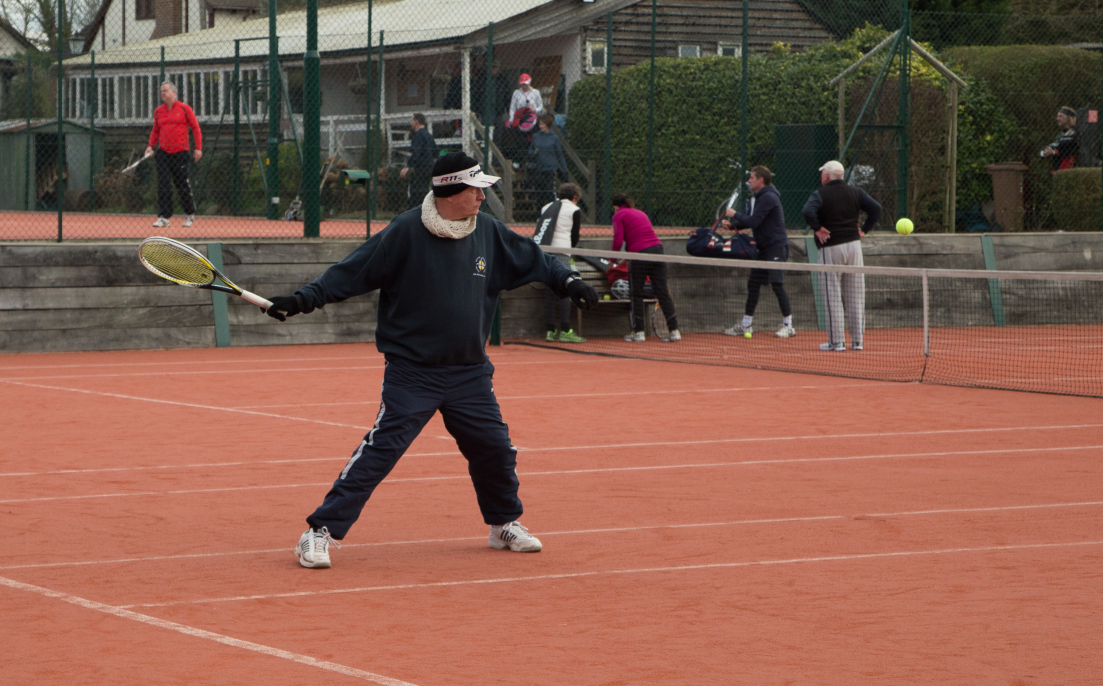
We would like to extend our heartfelt thanks to the following organizations that awarded grants to make this all possible:

SITA Trust
SITA Trust supports community and environmental improvement projects through the Landfill Communities Fund. See details of our project on their website here.

Inspired Facilities
Inspired Facilities Part of Places People Play, Sport England's programme to deliver a London 2012 legacy of increased mass participation in sport, Inspired Facilities is investing £50 million of National Lottery funding in up to 1000 community sports projects between 2011 and 2014.

Mayor of London Facilities Fund
The Mayor of London: Facility Fund is part of the Mayor's commitment to deliver a sporting legacy from the 2012 Olympic and Paralympic Games. Click here for more information.
Here is some more information on the Advantage RedCourt surface from the manufacturer's website:- Combining the playing characteristics and appearance of clay with the benefits of an all-weather playing surface, Advantage RedCourt only has to be installed on a stable, free draining base. As with traditional clay courts, play takes place on an unbound surface. Players can therefore develop and use slide in a controlled motion, allowing coverage of the whole court area with reduced effort and less stress on joints and ligaments. With near year-round playability, Advantage RedCourt allows matches and training to be conducted on an ideal tennis playing surface in comfort and with minimal downtime. For more information on the Advantage Red Court surface, please visit the website www.advantageredcourt.co.uk
Porous Macadam Courts
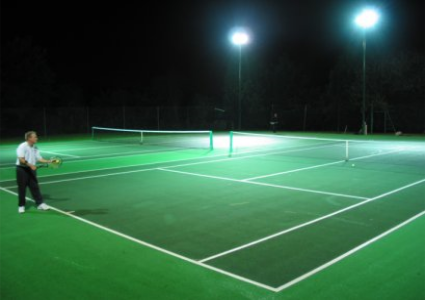
The three porous macadam courts were last resurfaced in 2016. The superb 10m high-level floodlights were installed on two of the courts in April 2002. Floodlighting at 8m height was installed on the third court in 2010. Porous macadam courts are a slow paced type of court with a good bounce height, excellent for teaching beginners and juniors. They drain very quickly after wet-weather and are painted with non-slip acrylic paint. We regularly pressure wash and treat the courts to keep them free from weeds and moss.
History
In 1976 Trinity Methodist/URC and Sutton Baptist Churches tennis clubs combine as Sutton Churches Tennis Club prompted by the vision of the Sutton Four Churches ecumenical project to increase Church unity in central Sutton through joint social and devotional activities, continuing today as Churches Uniting in Central Sutton (CUCS).
The summers of 1975 and 1976 were very hot making the shale courts on the Methodist/URC side of the shared grounds very dusty due to the hosepipe band. The Baptist Club had no such problem as their site had macadam courts. The two clubs agreed to set up a joint committee to formulate a merger. Glenda Lamden representing the Methodist/URC and Alan Mawby the Baptist representative along with David Garrett who was the SBLTC Captain worked very closely to set up new rules that both clubs and Churches agreed. These remain 'in situ' today with the two sites comprising the joint club remaining separately owned.
On 1st May 1977, the new club - Sutton Churches Tennis Club - was formally opened by Dr John Raw (a local GP and member) on behalf of Sutton Baptist Church, and Rev Dennis Creamer, minister of Sutton Trinity URC/Methodist Church at a ceremony at which they hit the first balls on court 2.
Since this time the club has continued in this spirit of unity and cooperation with the Minsters of both churches supporting the club in their roles of Joint Presidents by chairing the AGM attending on Finals Day and other events. A small number of church members play regularly but as we operate a 'tennis for all policy' and exist purely for the fun or playing tennis the membership of the Club is very broad representing the diverse mix of backgrounds etc that can be found in the Sutton area and beyond.
Many changes have taken place to the grounds enabling tennis to be played all year round up to 9pm each night including upgrading courts 1-4 to artificial clay, installing lighting on 6 of the 7 courts, refurbishing the smaller clubhouse as a recreational space etc. 12 teams are active in the leagues and a variety of coaching programmes have been initiated to encourage children and players from 3yrs upwards to enjoy the 'beautiful' game. We have an active social calendar and enjoy a variety of activities including tennis holidays, quizzes, in-house tournaments, annual Christmas meal etc. Although the churches still own the grounds, the club itself is run independently by its members and owns all other assets. All subscriptions are used for the running and maintenance of the club and as always there is still more work to be accomplished including the desire to bring our wooden club house, which was on the site pre 1930, into the 21st century.
Etiquette
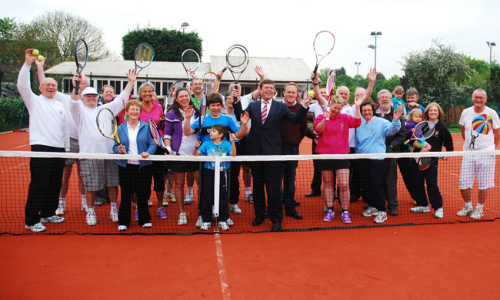
The atmosphere at our club sessions is relaxed and informal but it is still good practices to follow a few basic guidelines to ensure maximum enjoyment by everyone.
Clothing
For your own comfort, sports clothing of any colour, but suitable for tennis, should be worn on court. Proper tennis shoes must always be worn to protect yourself and the court surfaces. We request that adults do not wear football shirts.
Club Sessions - Court Etiquette
Don't walk behind a court when a point is in progress. Wait until the point is over and then cross or retrieve your ball as quickly as possible.
Retrieving Balls
Avoid wasting time collecting balls between points. If your opponent has to walk a significant distance to get a ball, look around your side to see if you can use that time to collect a ball that is a similar distance away. If the server needs a ball, the player closest to a ball should get it. Always look first before hitting balls toward the server's side and never hit them hard. Always hit the ball towards the server so that he/she does not have to run after it. Do not send balls back to the server in between first and second serve unless a let was called and the server requires an extra all. If the first serve goes in the net, the net player should ensure the ball is out of the way by pushing it towards the net or by picking it up. If you hit the ball into the net, you or your partner should take responsibility for retrieving it after the point.
If you've got more than your share of balls on your court, return the extra ones to a neighbouring court. When you do this, roll them to the back of the court and don't send them back while play is in progress.
The server should always make sure they have two balls at the start of each point. We strongly advise wearing tennis clothing with pockets, skirts with ball shorts, or a ball clip for keeping the second ball (it is best not to play with a ball in your hand). Never leave your second ball by your feet - it is dangerous!
Line Calls
Be responsible for calls on your side of the net. Make sure your opponents hear the call. If the ball is good, say nothing and play on. Always give your opponents the benefit of the doubt. If you are not sure if your opponent's shot is in or out, it is in! You should not call balls wide when they land near the far sideline (because you do not have a good enough view) unless the call is obvious and your partner was somehow hindered from seeing the ball land. If you are the receiver and your partner is on or near the service line at the start of the point, your partner has the best view of whether a serve is in or long. You can make a call if they don't, but always defer to their judgement. You generally should not disagree with your partner's calls anyway unless they have made a very clear mistake. Always respect your opponent's calls. You or your partner must never call your own first serve out, this has to be left to your opponent, who in playing may be giving you the benefit of any doubt. If you call your own serve out, your opponent could overrule and, having returned the ball, claim the point.
Balls are often called out when the land on the outer edge of the line, this is wrong! The rule is that the part of the ball that touched the ground must be entirely outside the line to be called OUT. Note: on shale/clay courts, the mark may be checked. If any part of the mark touches the line, the ball must be called IN. If in doubt, call it IN!
If a ball is 99% out, it is 100% good!
If the point is interrupted (often by a stray ball from a neighbouring court) and you wish to call for a let, do so immediately and raise your hand, otherwise play on. You cannot claim a let after the point has been lost!
Call and agree the game score at the start of each point and the set score at the start of each game. The server should take responsibility for calling the score clearly.
Club Sessions - Pegboard System
We use a pegboard system for fair and easy rotation of players and it works like this...
Each member has their own peg with their name on it. As players arrive they place their pegs in the queue to play. There is a section on the board for each of our 7 courts. When a court becomes available, the player at the front of the queue picks three others from the next seven pegs to play with (assuming it is doubles). Those players' pegs are then placed on the appropriate court section while they play a set. When they return, their pegs are placed at the back of the queue.
When you are a new member, picking a suitable four can seem a little daunting - don't be afraid to ask for help! It is generally good etiquette to pick the player who has been waiting the longest but also try to pick an even set. For example, it is not normally a very good idea to mix very strong players and very weak players - neither will thank you for it! However, if you have two strong players and a weak player, try to choose another fairly weak player to even it out. We normally pair the strongest and weakest to make the set as even and therefore as competitive as possible. If your four has just come off court and there are only four or five players in the queue, it can be a good idea to wait for another court to finish so that players can be mixed up a bit and you do not end up playing with the same three for the entire session.
Club Sessions - Children
Parents with young children and babies are welcome to bring them along to club sessions. Children can play in the clubhouse or in the grounds while parents are on court. For very young children, use of a playpen or baby chair is recommended.
Killer Deuce
Killer deuce is a sudden death point played in place of the normal advantage-style deuce. It is most commonly used when time is restricted. The receiver/s choose whether the serve will be taken from the left or the right, in the case of doubles, this also decides who will recieve the serve.
During club sessions, killer deuce is to be used when 4 courts or fewer are available for play (e.g. because of frost) and 5 or more people are waiting, otherwise normal deuce should be used.
Your Questions
If there are any other aspects of club etiquette which you would like included on this page, please email us with your question.
Rules & Useful Information
In club, match, and tournament play, all players should play by the ITF Rules of Tennis and always comply with The Code of Tennis, available below. The Code of Tennis gives a guide to default behaviour for all unofficiated matches on matters that are not covered by The Rules of Tennis, such as line calls, interrupted points, etc.
Committee
Every year at the AGM in November each member of the Committee stands down and is eligible for re-election. There may be vacancies so if you are a club member and think you could lend a hand please do make yourself known to the Hon. Secretary well in advance of the AGM.
Richard Garrett
Club Captain

Carolyn Graham
Vice Captain

Dominique Delhalle
Membership Secretary

Annabel Faulkner
Hon. Secretary

Tony Farrell
Hon. Treasurer

James Bryan
Social Secretary

David Garrett
Grounds Secretary

Andrea Hooper
Committee Member
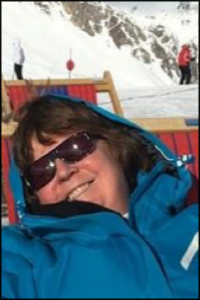
Annette McKiernan
Committee Member

Helen Parnell
Committee Member

Pauline Martin
Committee Member
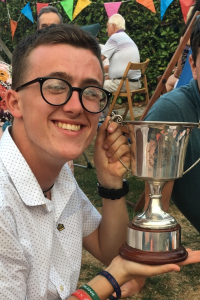
Peter Hickson
Committee Member

Simon Holcombe
Committee Member
Vice Presidents

Mary Burstow
Vice President

Glenda Lamden
Vice President
Church Representatives

Carolyn Graham
Sutton Baptist Church
Representative

David Garrett
Trinity Church
Representative
Coaches

Nathan Worrell
Head Coach
Registered Licensed Level 3 Coach (since 2014)
Fully Insured. Current DBS and First Aid Certificate
Contact Nathan
 | 07548 169 884

Kirsty Garrett
Level 3 Coach
Registered Licensed Level 3 Coach (since 2009)
Fully Insured. Current DBS and First Aid Certificate
Contact Kirsty
 | 07718 316 214
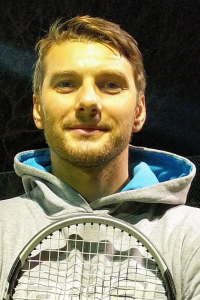
Vrajitoru Eugen
Level 2 Coach
Licensed Level 2 Coach (since 2018)
Current DBS and First Aid Certificate
Contact Eugen
 | 07459 903 388

Peter Hickson
Level 1 Coach
Licensed Level 1 Coach (since 2015)
Current DBS

Megan Bignell
Level 1 Coach
Licensed Level 1 Coach (since 2019)
Current DBS
